







Learn how to tune the Ford Ranger 2.0 TDCi EcoBlue Bi-Turbo with Continental SID213 ECU using ECM Titanium and KESS3 DynoDrive to achieve 241 hp and 601 Nm.

The goal of this project was to increase horsepower and torque to improve low-end pulling power during off-road and heavy-load driving.
Technical Specifications
- Vehicle:Ford Ranger 2.0 TDCi EcoBlue Bi-Turbo (205 hp / 151 kW, 488 Nm)
- Engine:1996 cm³ 4-cylinder Diesel Bi-Turbo
- ECU:Continental SID213
Baseline Test with Alientech KESS3 DynoDrive
Before modifying any files, we logged baseline power and torque using DynoDrive—the road-test measurement feature inside KESS3.
- Original Output:201 hp
- Original Torque:488 Nm
ECU Recalibration Process using ECM Titanium
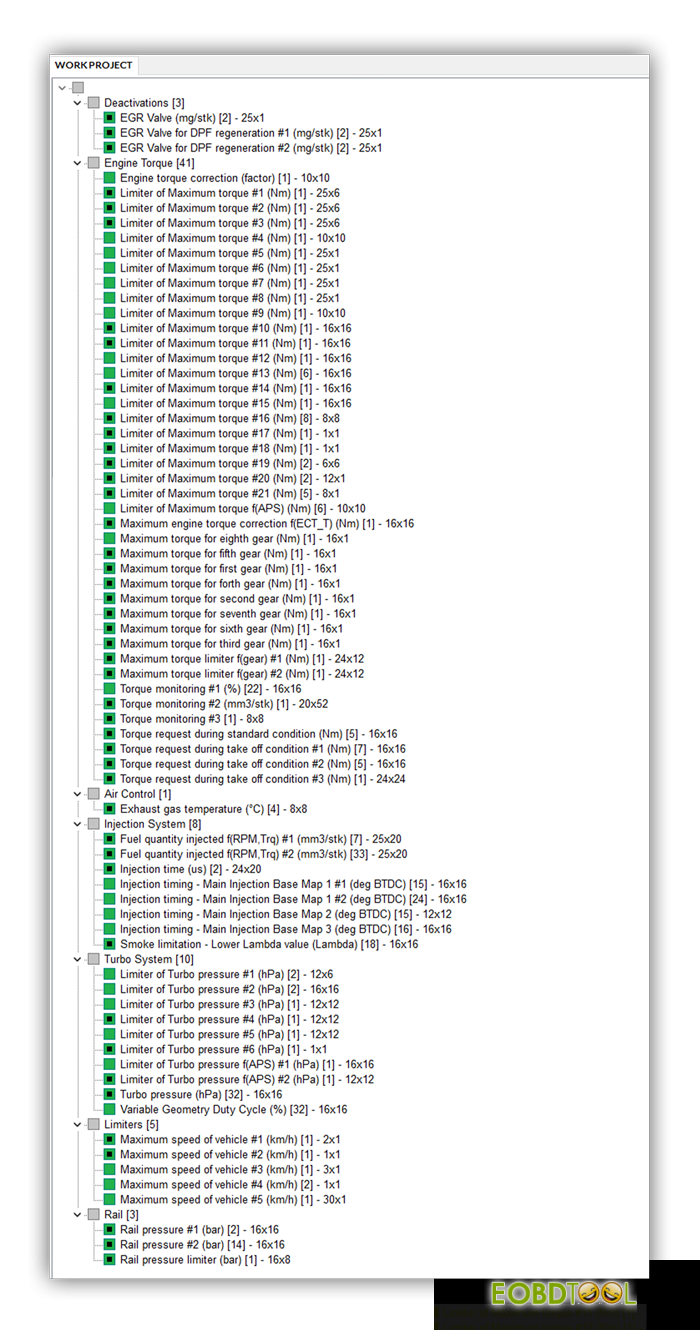
All modifications were completed purely through software, editing maps isolated by dedicated ECM Titanium drivers.
- Torque Limiters:Raised the maximum torque thresholds to allow higher engine output.
- Fuel Delivery:Increased injection duration and Injection Quantity (IQ) tables to match the higher torque demand.
- Air-Fuel Ratio & Smoke Control:Adjusted fuel delivery in coordination with lambda sensor limits to avoid exceeding smoke control thresholds.
- Air and Rail Pressure:Increased boost pressure and fuel rail pressure maps to balance the extra fuel supply and maintain efficient combustion.
- Speed Limiter:Removed the factory 180 km/h speed governor.
Dyno Test Results
After flashing the modified calibration back to the Continental SID213 ECU, a second DynoDrive test confirmed the performance gains:
- Horsepower:201 hp → 241 hp
- Torque:488 Nm → 601 Nm
- Power Curve:Broadened torque delivery across the low and mid RPM ranges.
Customer Feedback
“Now the Ranger has much more pulling power, especially when torque is needed at low and mid-range rpm. Under full load and in off-road use, you can feel the difference immediately: the engine is more responsive, stronger and maintains its power delivery better. It was exactly the result I was looking for, without having to make any mechanical modifications.”